
SLS-Free Toothpaste Benefits: Who Actually Needs It?
If you get frequent canker sores, experience persistent mouth sensitivity, or find that brushing leaves your mouth feeling raw, the ingredient most likely responsible is something you've never noticed on the label: sodium lauryl sulfate.
Sodium lauryl sulfate (SLS) is in roughly 80% of mainstream toothpastes. It's the ingredient that makes toothpaste foam. It serves no therapeutic function — it doesn't clean teeth better, strengthen enamel, or fight bacteria. It exists because consumers have been conditioned to associate foam with cleaning efficacy. As a result, most people brush twice a day with a foaming detergent applied directly to the soft tissue of their mouth, and never connect it to symptoms they've been experiencing for years.
This article covers what SLS is, what the peer-reviewed evidence shows about its effects, who is most likely to benefit from switching, and what to look for in an SLS-free formulation.
What Is Sodium Lauryl Sulfate?
Sodium lauryl sulfate is a surfactant — a compound that reduces surface tension between water and oil, enabling the two to mix. It was developed for industrial cleaning applications and became widely used in personal care products because it generates foam cheaply and efficiently.
In toothpaste, its role is entirely cosmetic: it makes the product lather during brushing. Lather has no effect on how well the toothpaste cleans your teeth; mechanical action (brushing) and the active ingredients (fluoride, in most cases) do the actual work.
SLS is classified as safe for cosmetic use at the concentrations typically found in toothpaste. The question is not whether SLS is toxic at those concentrations — it isn't — but whether it causes localised irritation in people with sensitive oral tissue. On that narrower question, the evidence is more specific.
What the Research Says About SLS and Mouth Irritation
Canker sores (aphthous ulcers)
The most studied connection between SLS and oral symptoms involves aphthous ulcers — the small, painful sores commonly called canker sores. These are not cold sores (which are viral); they are inflammatory lesions in the soft tissue of the mouth. They affect a significant minority of adults, with estimates ranging from 5–25% of the population experiencing them regularly.
Two landmark studies investigated SLS as a contributing factor:
A double-blind, crossover study published in Oral Diseases found that patients using SLS-containing toothpaste experienced more frequent and more severe aphthous ulcers compared to the same patients using SLS-free toothpaste over the trial period.1
An earlier randomised clinical trial (PubMed 7825393) reached similar conclusions: patients with recurrent aphthous stomatitis had significantly fewer ulcers when using SLS-free toothpaste.2
A systematic review of the available literature, published in the Journal of Oral Pathology & Medicine (2019), concluded that SLS-free toothpastes helped manage aphthous ulcers in susceptible patients.3
The proposed mechanism: SLS disrupts the protective mucosal layer lining the inside of the mouth — the thin protein film (mucin) that acts as a barrier between soft tissue and the oral environment. When that barrier is degraded by the detergent action of SLS, the underlying tissue becomes more vulnerable to irritation from food acids, bacterial toxins, and mechanical friction.
Dry mouth and altered taste perception
Several case reports and smaller studies have noted that SLS may temporarily denature proteins in saliva and on the tongue's taste buds, potentially contributing to the metallic or altered taste sensation some people experience after brushing with SLS-containing toothpaste. This effect is typically mild and transient, but for people with already-compromised salivary function (due to medications, systemic conditions, or age-related changes), it may compound existing dry mouth symptoms.
What SLS does not do
It is important to be balanced here. The evidence does not support claims that SLS causes cancer, disrupts hormones, or contributes to systemic toxicity at toothpaste concentrations. The scientific case against SLS is irritation-specific: it may damage the mucosal barrier in some individuals, triggering or worsening localised conditions like canker sores and sensitivity.
How SLS Affects the Mucosal Barrier
The diagram below illustrates the proposed mechanism by which SLS can disrupt the oral mucosal lining in susceptible individuals.
Proposed SLS disruption mechanism. Labels rendered as SVG text elements.
Who Is Most Likely to Benefit from Switching?
Not everyone needs an SLS-free toothpaste. Most people tolerate SLS without noticeable symptoms. But for the following groups, the evidence suggests that switching may reduce or eliminate recurring oral discomfort:
Scenario 1: You get canker sores more than twice a year. If you experience recurring aphthous ulcers, the research cited above directly applies to you. Multiple studies show reduced frequency and severity of canker sores in susceptible individuals who switch to SLS-free toothpaste. This is the strongest evidence-based indication for switching.
Scenario 2: You experience persistent gum sensitivity or soreness not explained by dental work. If your gums feel raw, irritated, or sensitive after brushing — and your dentist has not identified a structural cause — SLS-mediated mucosal disruption is a plausible contributing factor. Remove the variable for 4–6 weeks and observe.
Scenario 3: You have dry mouth (xerostomia) or take medications that reduce salivary flow. Reduced saliva means reduced natural mucosal protection. SLS further disrupts that protective layer. For people with dry mouth, an SLS-free formulation removes one additional source of irritation in an already compromised oral environment.
Scenario 4: You have recently had oral surgery, gum treatment, or orthodontic appliances placed. Healing tissue and new appliances introduce friction and injury sites. SLS-free toothpaste is generally recommended in post-procedural care contexts precisely because SLS may delay mucosal healing.
Scenario 5: You describe your brushing experience as "harsh" but have never changed your toothpaste. If brushing has always felt aggressive — foam, burning sensation, altered taste — you may simply have more sensitive oral mucosa than average. This is not a defect; it just means standard formulations are not optimised for you.
What to Look for in an SLS-Free Toothpaste
Choosing SLS-free is the first filter. Beyond that, the relevant questions are:
Does it contain fluoride? Fluoride is the single best-evidenced active ingredient for cavity prevention and enamel protection. SLS-free toothpastes that are also fluoride-free trade one defensible choice (no SLS) for a medically questionable one (no enamel protection). Look for sodium fluoride or stannous fluoride on the label.
What are the active ingredients doing for gum health? Most conventional toothpastes — including SLS-free ones — are formulated primarily for caries prevention. If you are removing SLS because you are concerned about gum tissue and mucosal health, it is worth asking whether the replacement formulation does anything to address the bacterial source of gum problems, not just the foaming detergent.
Are there unnecessary irritants still present? Some SLS-free toothpastes compensate with other surfactants (like sodium laureth sulfate or sodium coco sulfate) that may cause similar irritation. Check the ingredient list.
Is it triclosan-free? Triclosan — a broad-spectrum antimicrobial used in some older formulations — has been phased out in most markets following regulatory review. Confirm its absence.
For a deeper look at the natural active ingredients that make DENT-TASTIC different from other SLS-free options, see: Paeoniflorin + Quercetin explained →
The DENT-TASTIC Formulation
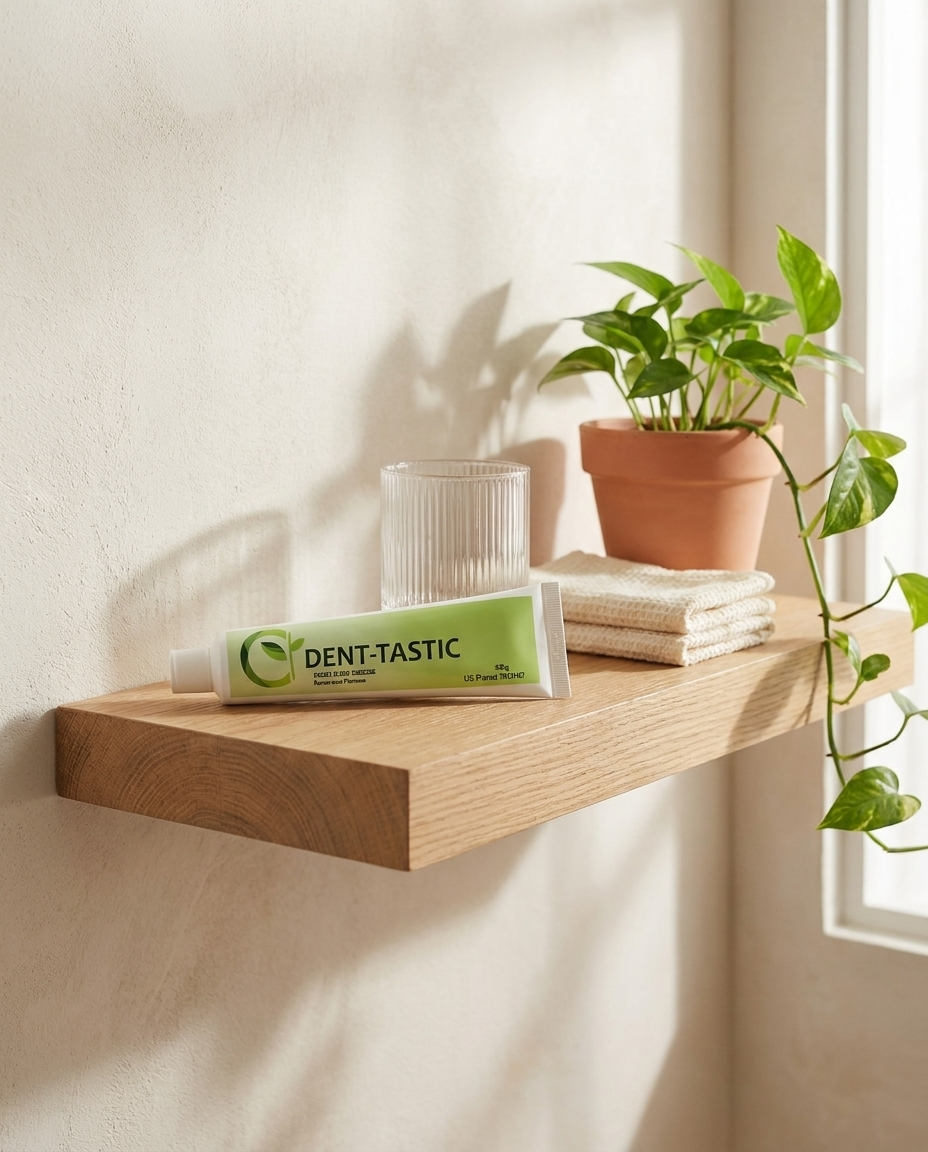
DENT-TASTIC Fresh Mint Toothpaste is SLS-free and triclosan-free — not as a marketing differentiation, but because the scientific rationale for removing these ingredients is sound for a formulation designed around oral microbiome health.
Beyond the SLS-free formulation, DENT-TASTIC includes two patented natural active ingredients — Paeoniflorin and Quercetin — that have been studied for their effects on the specific bacteria most associated with gum disease. The combination is protected under US Patent 7943187 and was developed by Professor Bakr Rabie, Professor of Orthodontics, University of Hong Kong, a Northwestern University graduate with a PhD in Molecular Biology.
The goal was not simply to remove a harmful ingredient (SLS), but to replace the entire conventional formulation logic with one built on targeted support for a healthy oral microbiome.
Try SLS-free for yourself. DENT-TASTIC Fresh Mint Toothpaste — SLS-free, triclosan-free, with patented natural active ingredients. Shop now — HK$48.00 →
For the broader context of how oral health connects to the rest of the body: → The oral-systemic connection
Key Takeaways
- SLS (sodium lauryl sulfate) is a foaming agent with no therapeutic benefit — it is added purely for cosmetic lather.
- Multiple clinical studies link SLS to increased frequency and severity of canker sores in susceptible individuals.
- The proposed mechanism is mucosal barrier disruption: SLS degrades the mucin protein layer protecting oral soft tissue.
- Not everyone needs SLS-free toothpaste — but people with recurring canker sores, oral sensitivity, dry mouth, or post-surgical recovery are the clearest candidates.
- Switching should be trialled for 4–6 weeks to assess whether symptoms improve.
- "SLS-free" alone is not sufficient — look for active ingredients that also address gum health, not just absent irritants.
Frequently Asked Questions
What is SLS in toothpaste?
Sodium lauryl sulfate (SLS) is a surfactant — a foaming agent — added to most conventional toothpastes to create lather during brushing. It serves a cosmetic function only; foam has no bearing on how well toothpaste cleans teeth. SLS is derived from lauric acid (found in coconut and palm kernel oil) and processed with sodium sulfate.
Does SLS cause canker sores?
Research suggests a relationship between SLS and increased frequency and severity of aphthous ulcers (canker sores) in susceptible individuals. Multiple clinical studies have found that people prone to canker sores experience fewer and milder ulcers when using SLS-free toothpaste. SLS does not appear to cause canker sores in people who are not already susceptible to them.
Is SLS in toothpaste dangerous?
At the concentrations found in toothpaste, SLS is not classified as dangerous by major regulatory bodies. The evidence-based concern is not systemic toxicity but localised mucosal irritation — specifically, SLS may disrupt the protective mucin layer inside the mouth, contributing to canker sores and sensitivity in vulnerable individuals.
What is the difference between SLS and SLES in toothpaste?
Sodium laureth sulfate (SLES) is a close relative of SLS, also used as a surfactant. It is considered slightly milder because it is ethoxylated (chemically modified), but some individuals with SLS sensitivity also react to SLES. If you are switching to an SLS-free product due to sensitivity, confirm that the replacement does not contain SLES as a substitute.
Can switching to SLS-free toothpaste reduce gum sensitivity?
For individuals who experience gum sensitivity related to mucosal irritation, switching to SLS-free toothpaste may help — particularly if SLS-mediated mucosal barrier disruption is a contributing factor. However, gum sensitivity has multiple causes including gum recession, enamel erosion, bruxism, and underlying periodontal disease. If sensitivity is persistent, a professional assessment is the appropriate first step.
References
- Shim YJ, et al. "Effect of sodium lauryl sulfate on recurrent aphthous stomatitis: a randomized controlled clinical trial." Oral Diseases. 2012. PubMed 30839136 ↩
- Chahine L, et al. "Sodium lauryl sulfate and recurrent aphthous ulcers. A randomized, double-blind, crossover-designed study." Acta Odontologica Scandinavica. 1997. PubMed 7825393 ↩
- Belenguer-Guallar I, et al. "Treatment of recurrent aphthous stomatitis. A literature review." Journal of Clinical and Experimental Dentistry. 2014. Referenced via: Brocklehurst P. "Sodium lauryl sulphate-free dentifrices for treating recurrent aphthous stomatitis." Cochrane Database. 2012. ↩
- Hall JG, Lamey PJ. "Sodium lauryl sulphate and recurrent aphthous ulcers — correlation between patient susceptibility and tissue irritation." Journal of Oral Pathology & Medicine. 2019. PMC9585602 ↩
About the author
This article was prepared by the DENT-TASTIC Editorial team with scientific oversight. DENT-TASTIC Fresh Mint Toothpaste was formulated by Professor Bakr Rabie, Professor of Orthodontics, University of Hong Kong, Northwestern University graduate with a PhD in Molecular Biology. Meet the founders →
Continue reading
Oral Systemic Health Connection: What Your Gums Reveal
Research has explored the oral systemic health connection between gum disease and cardiovascular, metabolic, and other conditions. Here's what the science actually says.
Read More →Paeoniflorin & Quercetin Toothpaste: The Science Explained
Paeoniflorin and Quercetin are DENT-TASTIC's patented active ingredients. Here's the peer-reviewed science behind how they work — and how they compare to conventional toothpaste.
Read More →What Does 'Orthodontist Approved' Actually Mean?
What does 'orthodontist approved' really mean on toothpaste? Learn what credentials matter, what claims are empty, and why professional formulation is different.
Read More →Ready to make the switch?
Try DENT-TASTIC Fresh Mint Toothpaste — formulated with patented natural active ingredients Quercetin and Paeoniflorin.
Shop Now